
How to Verify a Forex Broker's Licence in 5 Minutes
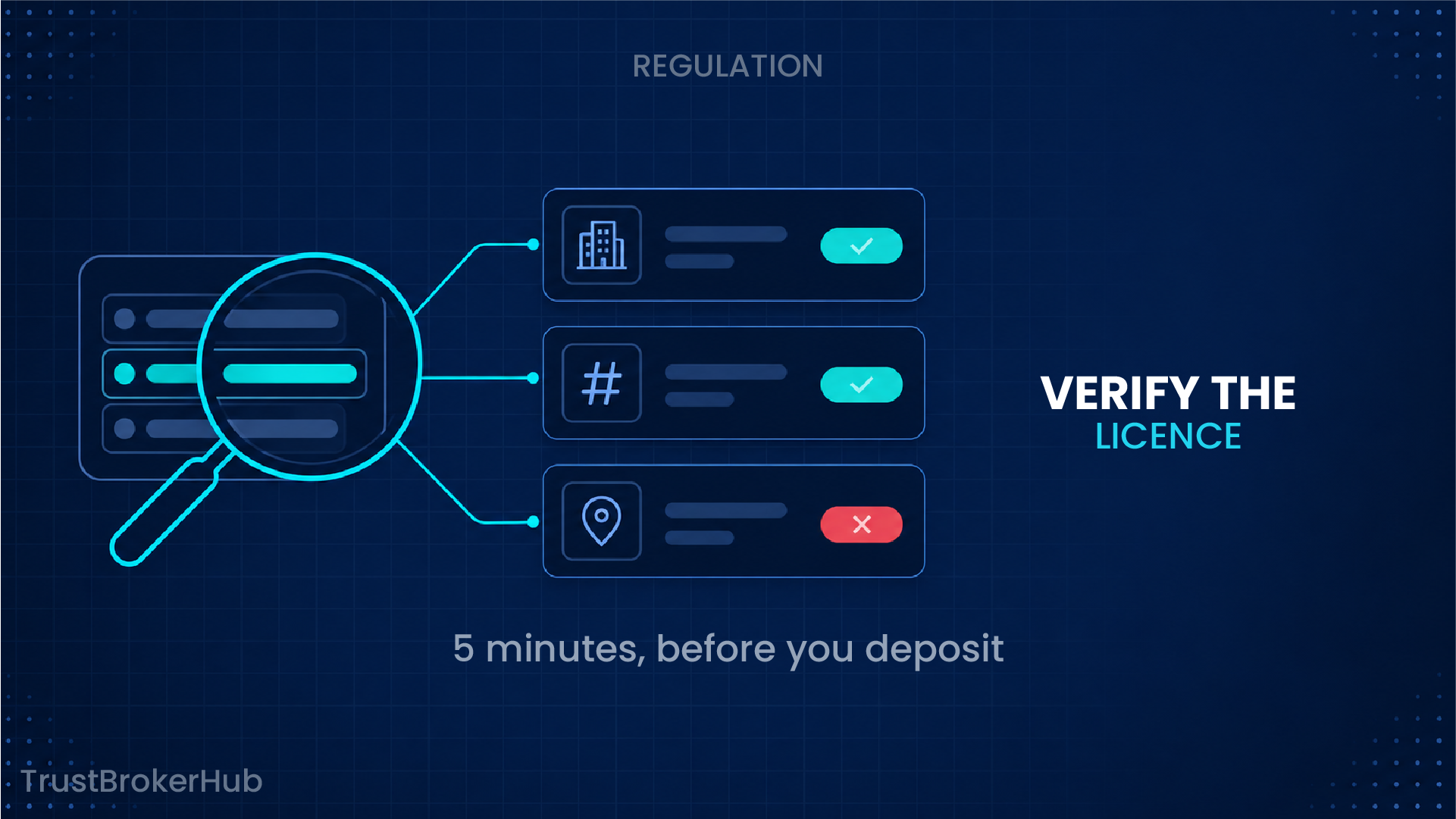
Every scam broker on the internet displays a licence number. Printing one in a website footer costs nothing and proves nothing. The only version of that number that means anything is the one sitting on the regulator's own database, and checking it takes about five minutes.
Step 1: Find the legal entity, not the brand
Scroll to the bottom of the broker's website and look for the company name, registration number and registered address. The brand you signed up with is often not the entity holding your money — a single brand frequently operates through several companies in different countries, each with different protections.
Write down the exact legal name. You are going to search for that, not the brand.
Step 2: Go to the regulator's website yourself
Do not click the broker's "verified" badge or its link to the register. Type the regulator's address into your browser directly, or find it through our regulator database. A link controlled by the broker can point anywhere, including a convincing copy of the register.
The registers you are most likely to need are the FCA (UK), ASIC (Australia), CySEC (Cyprus), BaFin (Germany), FINMA (Switzerland), FSA (Japan), MAS (Singapore), FSCA (South Africa) and the NFA (US).
Step 3: Match three things, not one
A licence number alone is not a match. Check that all three of these line up with what the broker told you:
The legal entity name, character for character.
The licence or reference number.
The registered address, website and phone number listed on the register.
If the register shows a different website or a different phone number to the one you have been using, stop. That is the signature of a clone, and it is one of the most common frauds in this industry.
Step 4: Read what the licence actually permits
Being on a register is not the same as being licensed to take your deposit. Some firms are authorised only to give advice, to introduce clients to another broker, or to deal with professional clients rather than retail ones. Others hold a corporate registration with no financial services permission at all.
The register entry will state the permitted activities. If it does not include dealing in investments or holding client money, the licence does not cover what the broker is doing with you.
Step 5: Check the warning lists
Most regulators publish a separate list of firms operating without authorisation, plus clone warnings naming specific fraudulent copies. Several central banks maintain their own alert lists of unauthorised electronic trading platforms alongside them.
Search the broker's name and the domain on those lists as well as the register, including in your own country — a firm licensed elsewhere can still be barred from soliciting residents where you live. Our scam alerts page collects warnings across jurisdictions if you would rather check several at once.
When the answer is "no licence"
Plenty of brokers accepting deposits worldwide hold no meaningful licence anywhere. That does not automatically mean the operator is a criminal, but it does mean there is no regulator to complain to, no ombudsman, no compensation scheme and no audit of where your money is kept. You are relying entirely on the goodwill of a company you have never met.
Our broker profiles record the regulatory status we have found for each firm, and the methodology explains how we check it.
Bottom line: verify the entity name, the number and the contact details on the regulator's own site before your first deposit, not after your first withdrawal problem.